Recently, a three-story multi-purpose office building sprang up at the COSCO SHIPPING Shipyard Nantong site. This containerized office building, deeply customized by Qidong Container Factory—a subsidiary of COSCO SHIPPING Development—to meet actual needs, was precisely assembled from 96 specialized prefabricated container units. The manufacturing of the box units took six days, and on-site assembly took five days, completing the building structure in just 11 days.
This is the 2.0 version of the modular office building by Qidong Container Factory.
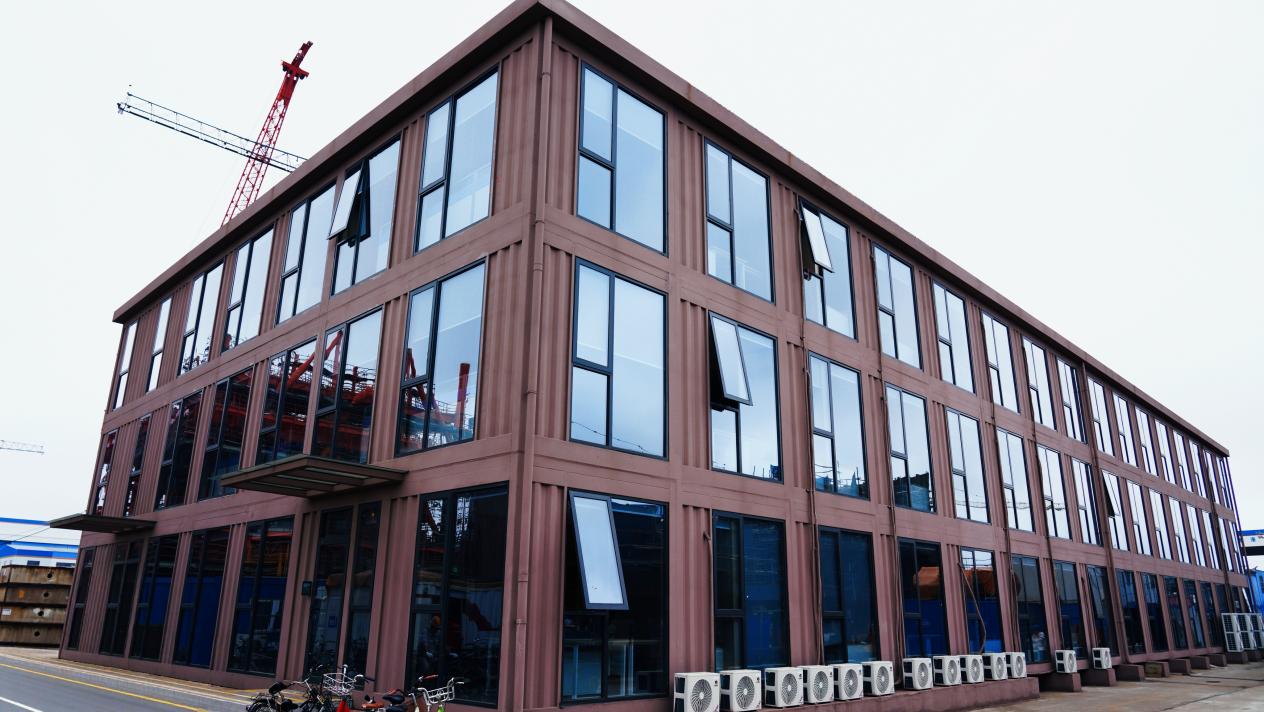
Its 1.0 version was put into use as the office building at Shanghai Changxing Ship Delivery Base.
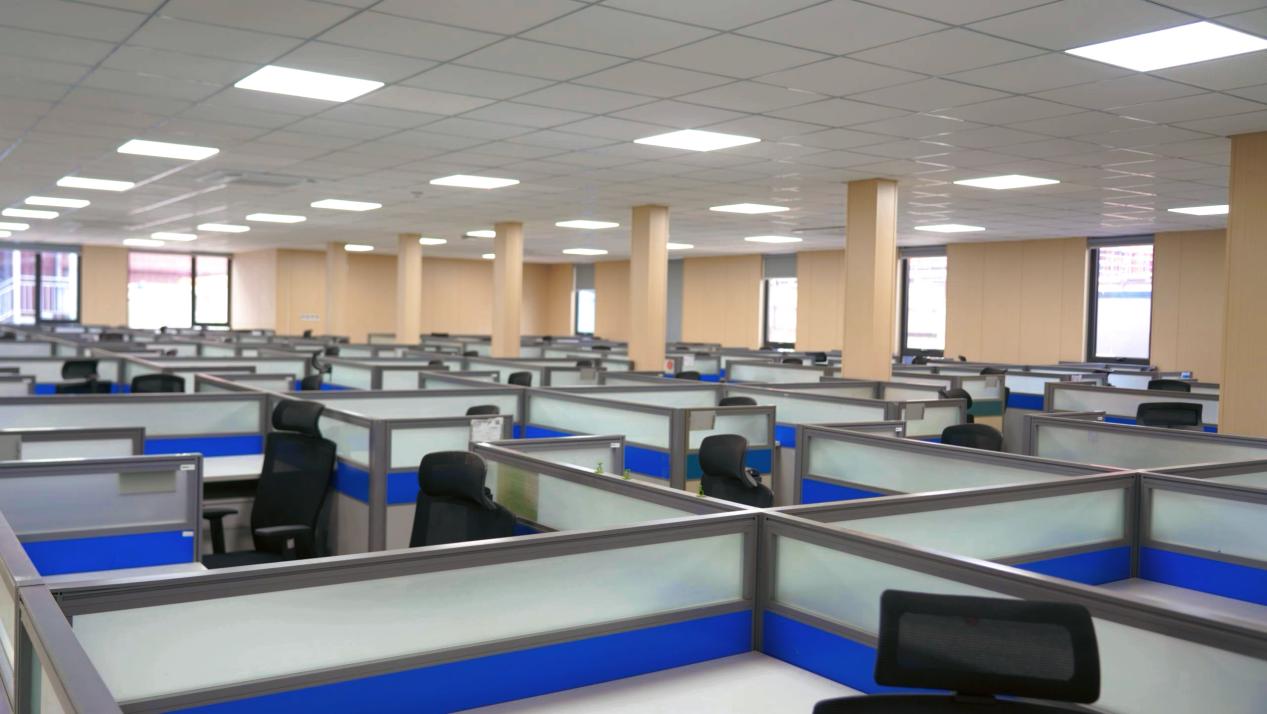
Balancing architectural design and practicality, it easily accommodates over a hundred people with comprehensive functions. Through features such as thermal insulation walls, heat-insulated doors and windows, as well as sound insulation and noise abatement, ventilation, and moisture-proofing, it has effectively improved the office environment for shipowners and on-site personnel.
The adoption of nearly 100 containers from design and production to assembly is a large-scale engineering project. The container factory affiliated with COSCO SHIPPING Development has transformed “container + building” into a standardized, systematic solution. A complete, mature, and efficient engineering system has been formed, covering design and R&D, manufacturing, logistics and transportation, on-site installation, and interior decoration. The feasibility of this model has been verified through multiple projects, demonstrating strong replicability and adaptability. On this occasion, in response to diversified site conditions and functional demands, the modular building has been upgraded with new technologies and materials.
Upgrade 1: A Lightweight yet Refined “Skeleton”
The modular office building comprises 48 six-meter standard containers and 48 fourteen-meter extended-length containers. Given this significant scale and considerable cost, how could economic efficiency be achieved while ensuring structural stability?
Qidong Container Factory utilized innovative technology to “slim down” the container beams. They employed 6-millimeter steel plates bent into shape to serve as the top beams, bottom beams, and side beams, replacing the previously used heavy square tubes. This made the container skeleton more refined and lighter, thereby saving both steel material costs and transportation expenses.
Furthermore, the new design utilizes a welded combination of the box units, eliminating the traditional bulky corner fittings at the four corners of containers. This results in a more sleek and streamlined architectural façade. Relying on the overall frame to bear structural loads, the structural stability has been significantly enhanced, ensuring greater safety performance.
Upgrade 2: High-Precision “Prefabrication”
Previously, container-based structures relied primarily on on-site assembly. This time, to ensure greater precision and efficiency, Qidong Container Factory pre-completed the welded assembly of integrated “6m + 14m” large modules within the factory. These were transported to the site as complete functional units, requiring only overall hoisting and inter-story connection upon arrival. This substantially reduced the workload, improved dimensional accuracy, ensured tighter box assembly, and shortened the delivery timeline.
Upgrade 3: An Eco-friendly and “Self-healing” Skin
For an office building with frequent personnel flow, durability and environmental performance are particularly important. On this occasion, Qidong Container Factory employed a new material that possesses both “self-healing” capabilities and high aesthetic appeal.
The interior walls of the building extensively utilize coating-free Zinc-Aluminum-Magnesium (Zn-Al-Mg) panels. On one hand, this new coating-free material reduces VOC (Volatile Organic Compounds) emissions from paint spraying, while presenting a refined, premium metallic texture.
On the other hand, it offers long-term corrosion and moisture resistance, along with unique “self-repair” capabilities. When the metal surface is exposed to air, it rapidly reacts with oxygen and water vapor to form a dense protective film, preventing further corrosion. This makes it particularly suitable for high-humidity environments such as coastal areas, truly achieving a balance of green, aesthetic, and durable qualities. From office buildings to dormitories, and from stations to exhibition halls, modular container buildings characterized by rapid deployment and flexible combinations are continuously expanding the boundaries of their application.