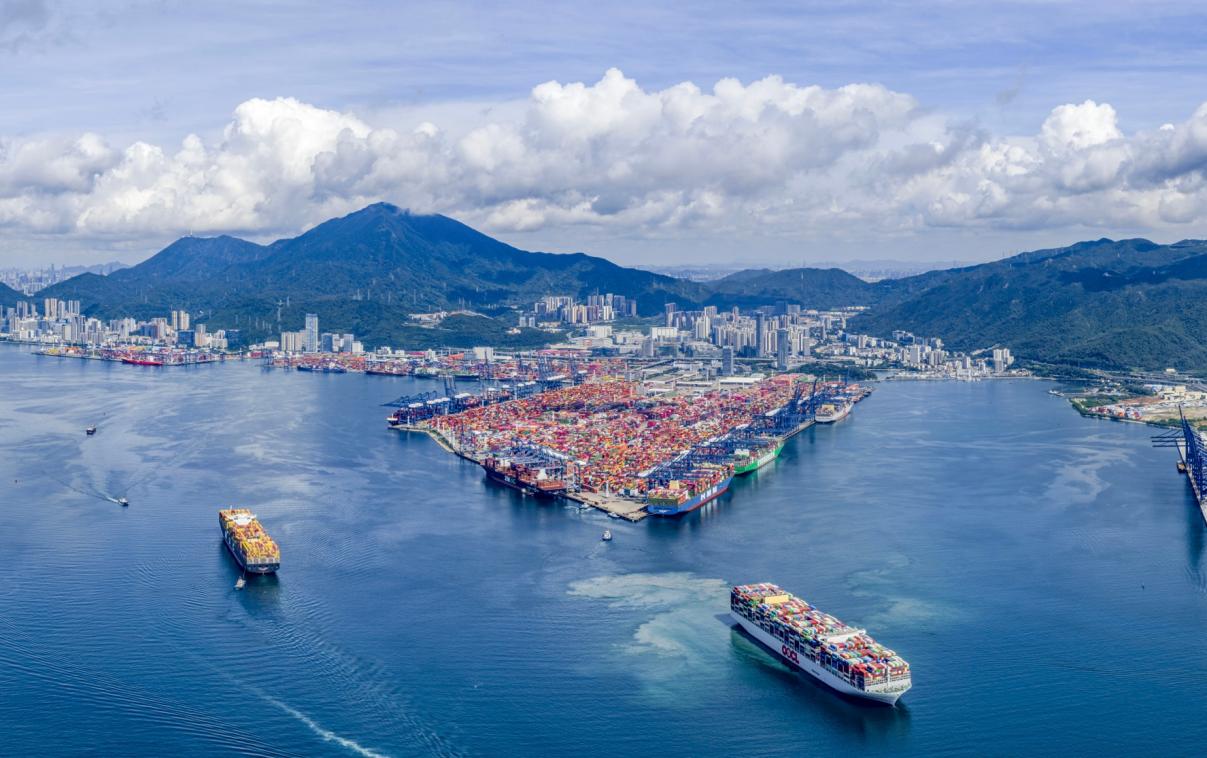
Recently, the Asian Freight, Logistics and Supply Chain (AFLAS) Awards ceremony, known as the “Oscars of the logistics industry,” was held in Shanghai. COSCO SHIPPING’s subsidiary Yantian International Container Terminals (YICT) secured two awards.
🏆Best Global Container Terminal
🏆Best Sustainable Container Terminal
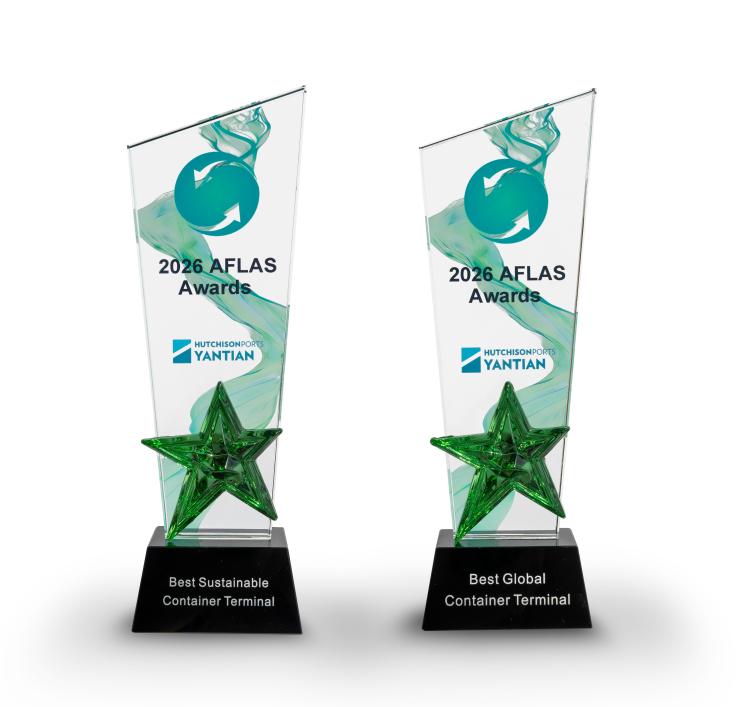
This marks the first time YICT has been honored with the “Best Global Container Terminal” award, following its previous three-time triumph as “Asia’s Best Container Terminal (Over 4 Million TEU).”
Organized annually by Asia Cargo News, the AFLAS Awards aim to recognize leading service providers, including air and shipping lines, airports and seaports, logistics companies, third-party logistics providers, and other related industry professionals. Through voting by international logistics companies and cargo owners, the awards select organizations that demonstrate excellence in leadership, service quality, innovation, customer relationship management, and reliability.
These latest accolades set a new milestone in YICT’s award-winning history and further signifies that its exceptional port operations capabilities, route network, and comprehensive service levels have gained industry-wide recognition on a global scale.
Meanwhile, YICT’s performance in the field of sustainable development is equally outstanding. Since 2019, it has won the “Best Sustainable Container Terminal Award” (formerly known as “Best Global Green Container Terminal”) five times in eight years, becoming the only container terminal globally to have won this honor five times. Behind this achievement lies YICT’s continuous investment and solid actions in green and low-carbon development.
Deepening Route Network to Facilitate APEC and Greater Bay Area Connectivity
In 2025, YICT delivered an outstanding performance—with annual container throughput exceeding 16 million TEU, setting a new historic high. Customs data reveals that from January to May this year, imports and exports by mainland Chinese enterprises reached RMB 395.8 billion with other APEC economies via Yantian Port, accounting for over 50% of the port’s total import and export value during the same period. This data highlights Yantian Port’s pivotal role as a key gateway connecting the Guangdong-Hong Kong-Macao Greater Bay Area with APEC member economies.
Fully leveraging its role as an international shipping hub in the Greater Bay Area, YICT has opened a cumulative total of 10 new APEC international routes so far this year. This provides solid support for economic and trade exchanges between the Greater Bay Area and APEC economies, as well as the global market, offering a reliable guarantee for the stability and smooth flow of global industrial and supply chains.
While strengthening international route services, YICT continues to refine its comprehensive logistics system featuring “internal connectivity and external access.” It owns Shenzhen’s only railway that provides direct access to the terminal area, and continuously expands its rail-sea intermodal transport, barge, and combination port networks. Currently, it has established 35 inland ports, 37 rail-sea intermodal routes, 15 Greater Bay Area combination ports, and 17 barge feeder services, with coverage extending to the Greater Bay Area, Southwest, and Central China. Scheduled block trains such as the “Chengdu-Shenzhen-Hong Kong” and “Chongqing-Shenzhen-Hong Kong” services have achieved stable, normalized operations.
(Scheduled block train: Refers to freight trains listed in the train operation diagram, characterized by fixed points, routes, schedules, pricing, and train numbers, also known as “Five Fixed” block trains.)
Furthermore, YICT has consistently promoted Shenzhen-Hong Kong cooperation, working together with the Kwai Tsing Container Terminals in Hong Kong to enhance “internal connectivity and external access.” The barge service between Yantian and Hong Kong has been in operation for over 32 years, with six daily sailings, and transported volumes continue to maintain positive annual growth.
Parallel Progress in Efficiency Enhancement and Carbon Reduction: Ten Years of “Growth without Carbon Increase”
Green and sustainable development constitutes the core competitiveness enabling YICT to continuously gain international recognition. In recent years, it has pursued a development path of “parallel progress in efficiency enhancement and carbon reduction.” The data is most persuasive:
Ten-Year Development Data (2015-2025): While annual throughput increased by 25%, carbon emissions per TEU dropped significantly by 32%, achieving “growth without carbon increase.”
Leading the Nation in Shore Power Construction: YICT was the first to achieve 100% shore power coverage at berth. It was the earliest in China to deploy shore power on a large scale and leads in berth power supply capacity. It ranks top nationwide in shore power supply volume for a single terminal, with its total supply accounting for one-quarter of the national total for terminal shore power.
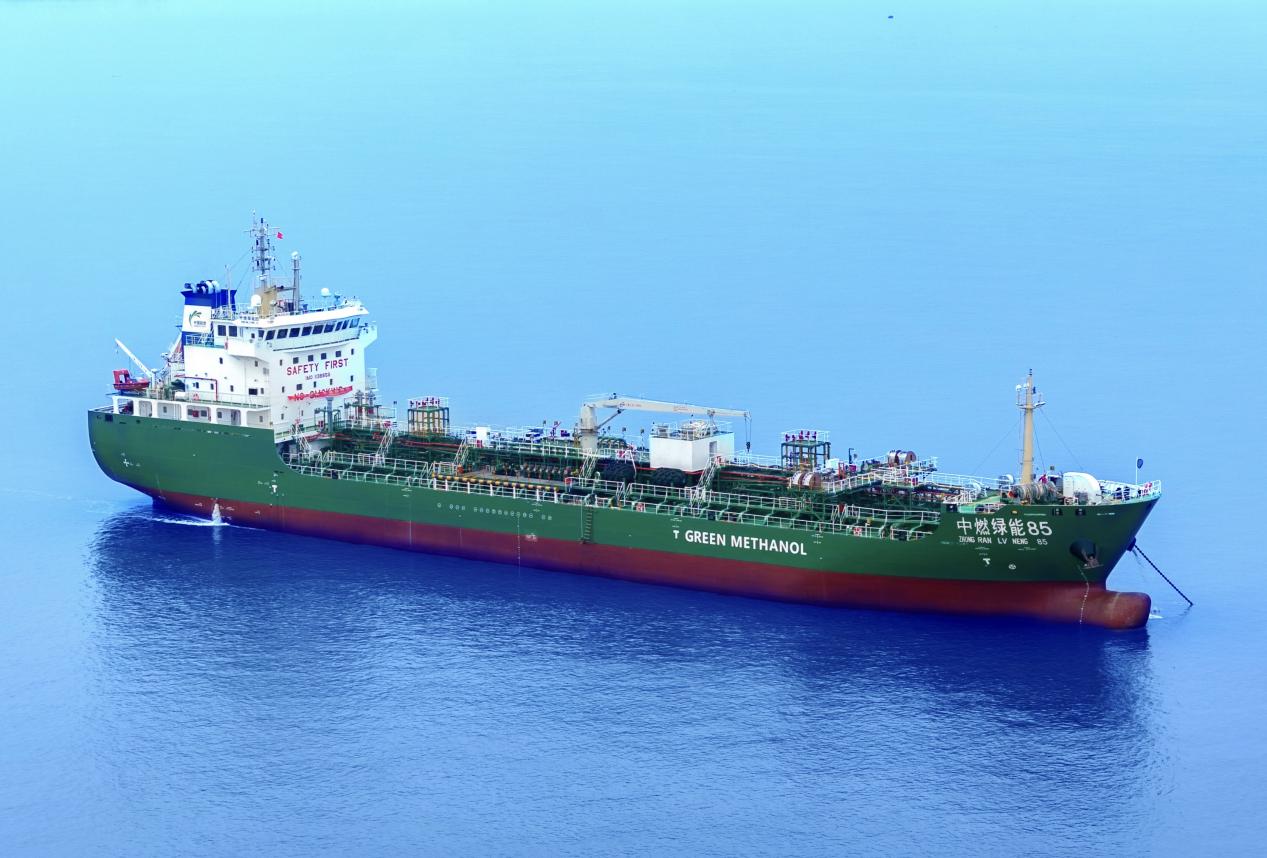
Diversified Green Energy Bunkering System: In November 2022, YICT completed the first LNG bunkering for an international sailing vessel, becoming the fourth hub port globally and the first in South China with LNG bunkering service capabilities. Subsequently, it completed the Greater Bay Area’s first green methanol bunkering operation, Shenzhen’s first bonded LNG bunkering at anchorage, and the nation’s first simultaneous LNG bunkering for two vessels, thereby constructing a diversified green energy bunkering system encompassing LNG, methanol, and shore power.
One of the World’s Largest Ports for Chassis Swapping: The chassis-mounted heavy-duty truck swapping project, promoted by YICT in collaboration with CATL Qiji, has achieved large-scale “three-station linkage” operations. Along with the world’s first in-terminal chassis-mounted heavy-duty truck swapping station, the three stations within the port area can provide swapping services for over 260 chassis-mounted trucks, with a single swap taking approximately 5 minutes.
Intermodal Transport Effectively Reduces Carbon Emissions: As key links for “internal connectivity and external access” in port collection and distribution, barge transport and rail-sea intermodal transport allow a single barge to carry multiple batches of cargo. They are largely unaffected by severe weather and holiday congestion. While replacing road trucking and alleviating traffic pressure, they significantly lower carbon emissions. This plays a vital supporting role in reducing environmental pollution and safety accidents, lowering energy consumption costs, adjusting the transport structure, and promoting the high-quality development of national foreign trade.